
What is an Extrusion Machine? A Comprehensive Guide
An extrusion machine, often simply called an extruder, is a fundamental piece of industrial equipment used to create objects of a fixed cross-sectional profile. It works by forcing a raw material through a shaped die under controlled conditions. This versatile manufacturing process is central to producing a vast array of everyday items, from plastic pipes and aluminum window frames to food products like pasta and snacks. At its core, extrusion is a continuous shaping process that offers high efficiency, consistency, and the ability to create complex profiles.
How Does an Extrusion Machine Work?
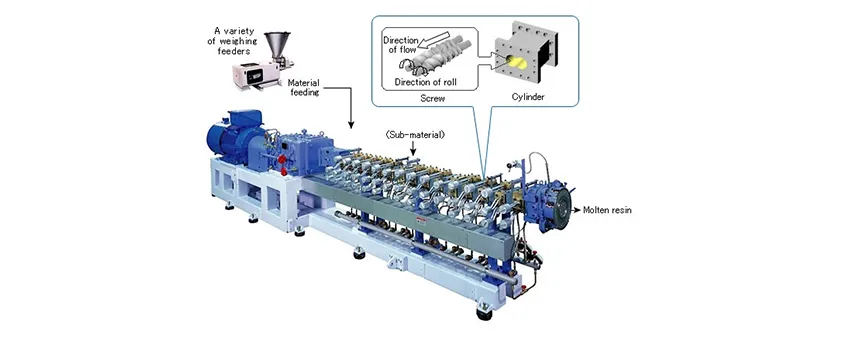
The extrusion process can be broken down into a few key stages, common across most types of extruders. The principle involves heating, compressing, and homogenizing the material before pushing it through a die.
Key Stages in the Extrusion Process
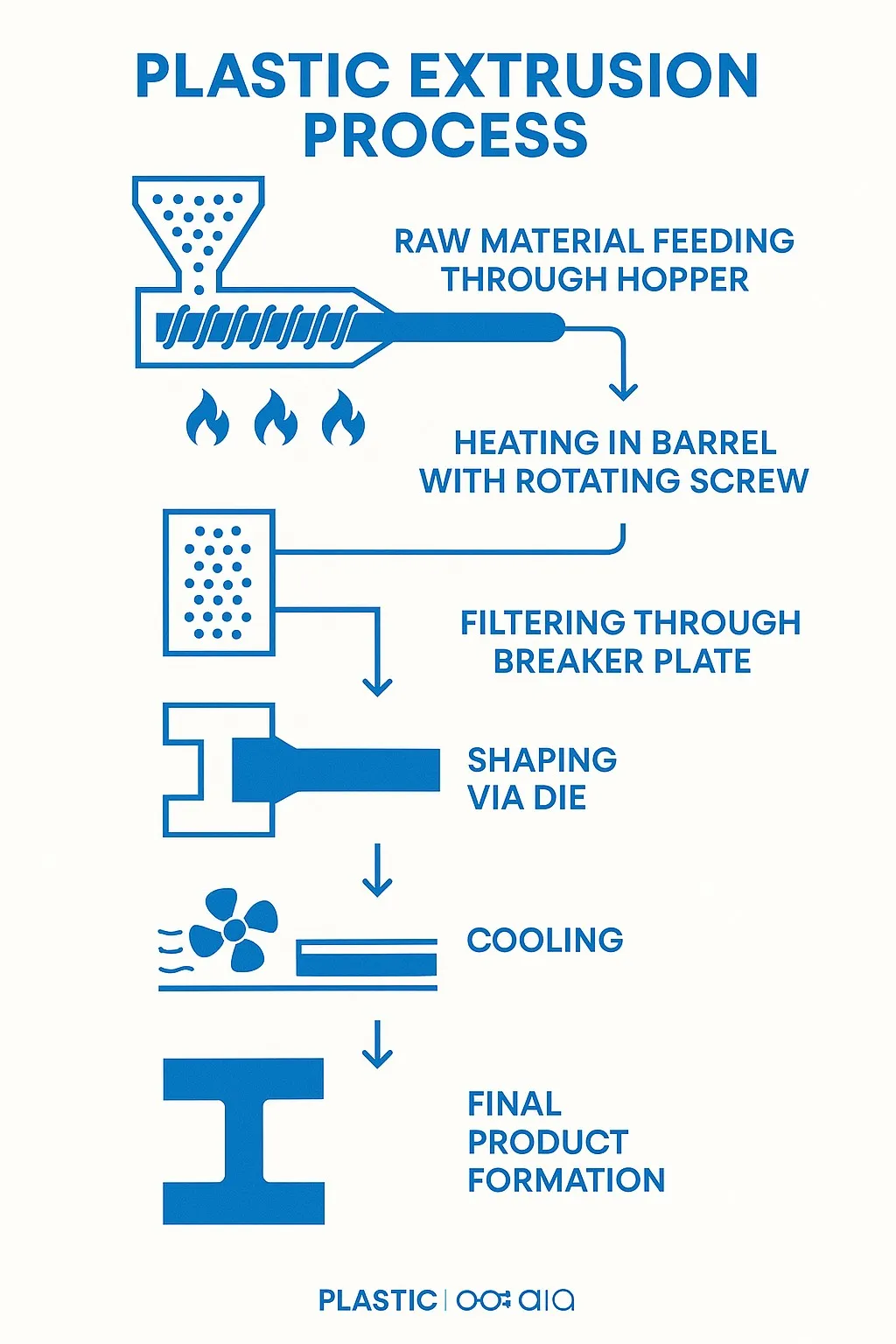
- Feeding: Raw material in the form of pellets, powder, or granules is fed into the extruder's hopper.
- Plasticizing and Compression: The material enters the barrel, where it is heated (via external heaters and internal friction) and compressed by a rotating screw. This action melts the material (in the case of thermoplastics) or softens it into a pliable state.
- Homogenization: The screw's design mixes the material to ensure a uniform temperature, viscosity, and composition.
- Extrusion Through the Die: The now-molten or soft material is forced under high pressure through a specially designed die opening. The die gives the material its final shape.
- Cooling and Sizing: The extruded profile is then cooled, typically using water baths or air cooling, to solidify its shape. Sizing tools may be used to ensure precise dimensions.
- Pulling and Cutting: A puller or haul-off unit draws the cooled profile at a constant speed. Finally, a cutter slices the continuous profile to the desired length.
Main Components of an Extrusion Machine
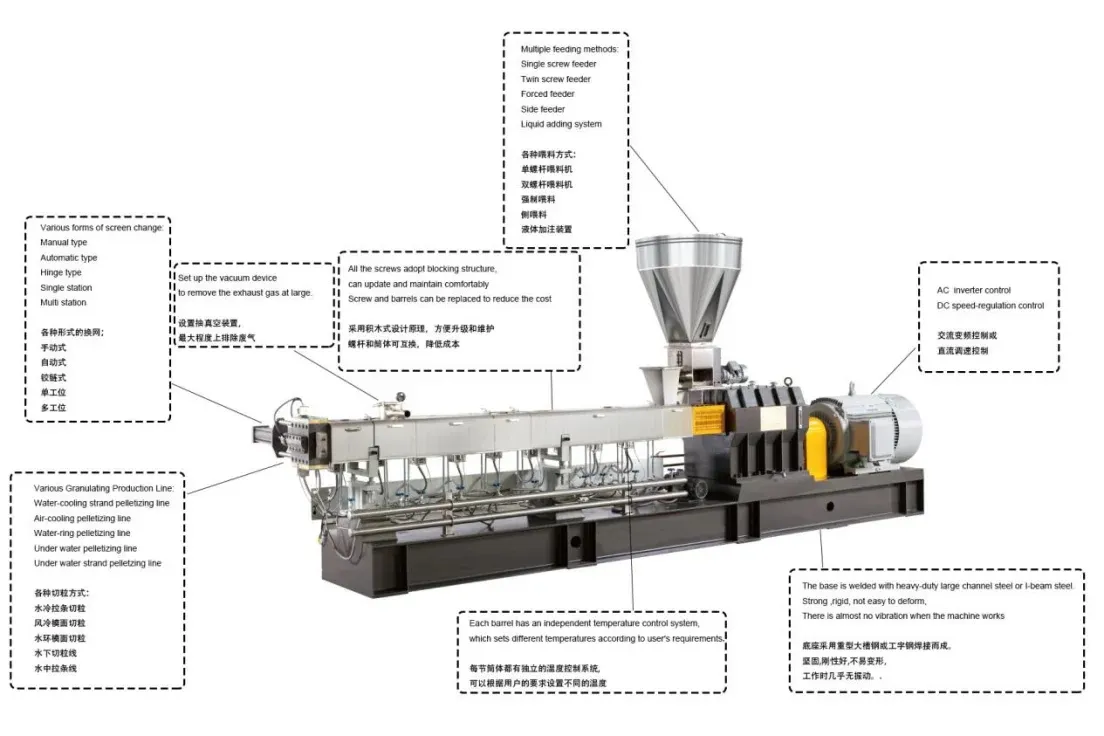
Understanding the major parts of an extruder is crucial to understanding its function. The table below summarizes the core components:
| Component | Function | Material/Notes |
|---|---|---|
| Hopper | Holds and feeds the raw material into the barrel. | Stainless steel; may include drying or mixing features. |
| Barrel | A heated cylindrical housing that contains the screw. | Hardened steel alloy with heater bands and cooling jackets. |
| Screw | The heart of the machine. It rotates to convey, compress, melt, and pump the material. | High-strength steel; design varies (single/twin, compression ratio). |
| Die | A metal plate with a custom-shaped opening that defines the profile of the extrudate. | Tool steel; precision-machined for specific profiles. |
| Heating & Cooling System | Provides precise temperature control in different barrel zones. | Electric heaters, water or air cooling circuits. |
| Drive Motor | Provides the power to rotate the screw at variable speeds. | AC or DC motor with a gear reduction unit. |
| Control System | Monitors and controls temperature, screw speed, pressure, and puller speed. | Modern PLC (Programmable Logic Controller) with touchscreen HMI. |
Types of Extrusion Machines
Extruders are classified based on their mechanism and the material they process. The two primary categories are:
1. Single-Screw Extruders
The most common and economical type. It uses a single rotating screw inside the barrel. Ideal for straightforward tasks involving a single, well-compounded material. It offers simplicity and reliability but limited mixing capability.
2. Twin-Screw Extruders
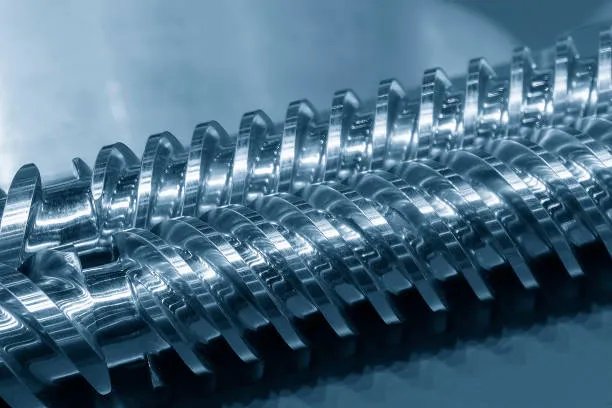
Employ two intermeshing screws that rotate inside the barrel. They provide superior mixing, compounding, and heat control. Essential for processing PVC, engineering plastics, masterbatches, and food products. They can be co-rotating or counter-rotating.
Other Classifications
- By Process: Hot Extrusion (for metals, most plastics), Cold Extrusion (for softer metals like aluminum at room temperature).
- By Material: Plastic Extruders, Metal Extruders, Food Extruders.
- By Direction: Horizontal (most common) and Vertical (used for specific applications like cable coating).
Applications of Extrusion Machines
The extrusion process is ubiquitous across multiple industries due to its versatility in shaping materials.
Plastics and Polymers Industry
The largest application area. Used to produce:
- Profiles: Window frames, decking, trim, pipes, tubes, sheets, and films.
- Films & Sheets: Packaging films, garbage bags, geomembranes.
- Filaments: 3D printing filaments.
- Coating: Insulation for electrical wires and cables.
Metal Industry
Primarily for aluminum, copper, and steel, producing rods, bars, hollow tubes, and structural shapes used in construction, automotive, and aerospace.
Food Industry
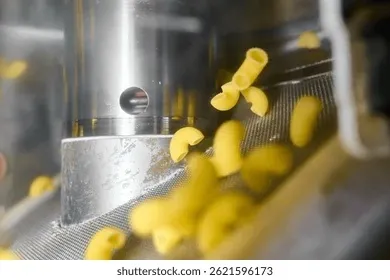
Food extruders cook, shape, and texturize ingredients. Products include:
- Pasta (spaghetti, macaroni)
- Breakfast cereals
- Snack foods (cheese puffs, pretzels)
- Pet food kibble
Other Industries
Used in ceramics (to form bricks and tiles), pharmaceuticals (for drug delivery systems), and composite materials manufacturing.
Advantages and Limitations of Extrusion
Like any process, extrusion has its strengths and weaknesses.
Advantages
- Continuous Production: Enables high-volume, 24/7 manufacturing with consistent quality.
- Design Flexibility: Can produce very complex cross-sections that are impossible with other methods.
- Cost-Effective: Low waste (trimming can be recycled), high automation, and efficient material use.
- Material Versatility: Can process a wide range of materials from plastics and metals to foodstuffs.
- Improved Material Properties: The process can align molecules (in polymers) or grains (in metals), enhancing strength in the extrusion direction.
Limitations
- High Initial Cost: Machinery and custom dies can be expensive.
- Cross-Section Constancy: Only products with a constant cross-section can be made in a continuous length. Changes in shape require a die change.
- Size Limitations: The size of the extrudate is limited by the equipment size and power.
- Thermal Control: Precise temperature control is critical; variations can lead to defects.
Conclusion
The extrusion machine is a cornerstone of modern manufacturing, enabling the efficient, continuous production of a staggering variety of products that form the backbone of our built environment and daily consumption. From the PVC pipes in our walls to the aluminum in our cars and the cereal in our bowls, extrusion shapes the world around us. Its ongoing evolution, particularly in twin-screw technology and process control, continues to expand its capabilities, making it an indispensable tool for innovation across countless industries.