Transfer Molding Process: A Comprehensive Guide
Introduction to Transfer Molding
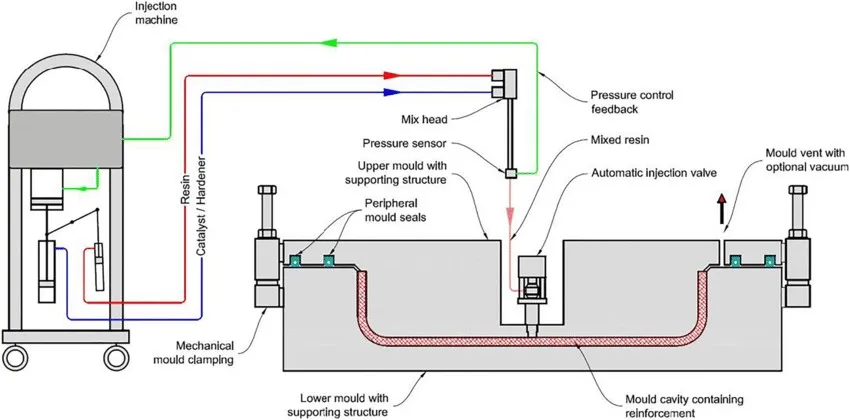
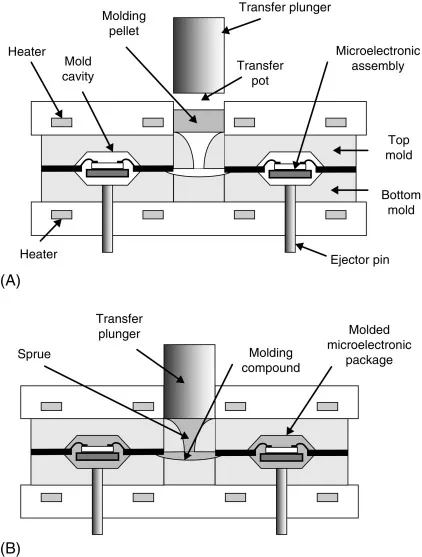
Transfer molding is a manufacturing process used primarily for thermosetting plastics and rubber materials. This technique combines elements of compression molding and injection molding, offering unique advantages for specific applications. The process involves transferring a pre-measured amount of material from a transfer pot through runners and gates into a closed mold cavity under high pressure and temperature.
How Transfer Molding Works
Process Overview
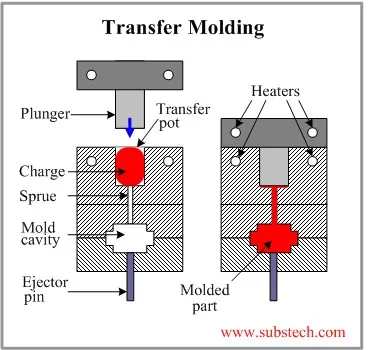
The transfer molding process begins with the preparation of raw material, typically in the form of pellets, powder, or preforms. The material is placed in a transfer pot or chamber, which is heated to soften the material. A plunger then applies pressure to force the material through a sprue and runner system into the mold cavities.
Key Process Steps
The complete transfer molding cycle consists of several critical steps:
- Material preparation and loading
- Mold closing and clamping
- Material transfer into cavities
- Curing and cross-linking
- Mold opening and part ejection
Types of Transfer Molding
Pot Transfer Molding
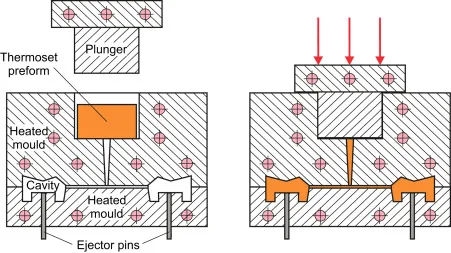
Pot transfer molding uses a separate pot chamber where the material is loaded. The plunger forces the material downward through the sprue into the mold cavities. This method is suitable for simpler parts and lower production volumes.
Plunger Transfer Molding
Plunger transfer molding incorporates the transfer chamber as part of the mold. The plunger moves horizontally to force material into the cavities, providing better control over material flow and pressure distribution.
Screw Transfer Molding
Screw transfer molding uses a reciprocating screw to plasticize and transfer the material, similar to injection molding but with thermosetting materials. This method offers superior mixing and temperature control.
Materials Used in Transfer Molding
Transfer molding is particularly suited for thermosetting materials that undergo irreversible chemical changes during curing. Common materials include:
| Material Type | Properties | Common Applications |
|---|---|---|
| Epoxy Resins | Excellent electrical insulation, chemical resistance | Electronic encapsulation, electrical components |
| Phenolic Compounds | High strength, heat resistance | Automotive parts, electrical switches |
| Silicone Rubber | Flexibility, high temperature resistance | Medical devices, seals, gaskets |
| DAP (Diallyl Phthalate) | Dimensional stability, low moisture absorption | Connectors, insulators |
Advantages of Transfer Molding
Design Flexibility
Transfer molding allows for complex part geometries, intricate details, and the encapsulation of inserts. The process can produce parts with varying wall thicknesses and complex internal structures that would be challenging with other molding methods.
Material Efficiency
The controlled material transfer minimizes waste compared to compression molding. The runner system can be designed to optimize material usage, and any excess material (flash) can often be recycled.
Process Control
Transfer molding provides excellent control over material flow, pressure, and temperature distribution. This results in consistent part quality, reduced voids, and improved mechanical properties.
Applications of Transfer Molding
Electronics Industry
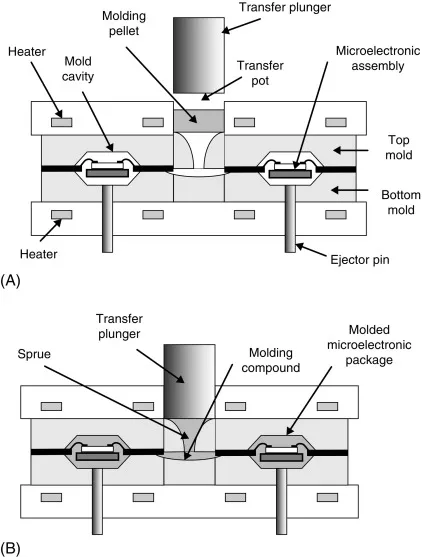
Transfer molding is widely used in the electronics industry for encapsulating integrated circuits (ICs), semiconductors, and other electronic components. The process provides excellent protection against moisture, chemicals, and mechanical stress.
Automotive Components
Various automotive parts, including electrical connectors, sensors, and under-hood components, are manufactured using transfer molding. The process meets the demanding requirements for heat resistance and durability in automotive applications.
Medical Devices
Medical device manufacturers utilize transfer molding for producing silicone rubber components, drug delivery systems, and diagnostic equipment. The process ensures biocompatibility and meets strict regulatory standards.
Process Parameters and Optimization
| Parameter | Typical Range | Effect on Quality |
|---|---|---|
| Transfer Pressure | 500-2000 psi | Affects material flow and density |
| Mold Temperature | 150-200°C | Controls curing rate and cycle time |
| Transfer Time | 10-60 seconds | Determines fill completeness |
| Cure Time | 30-300 seconds | Affects cross-linking and final properties |
Comparison with Other Molding Processes
Transfer Molding vs. Compression Molding
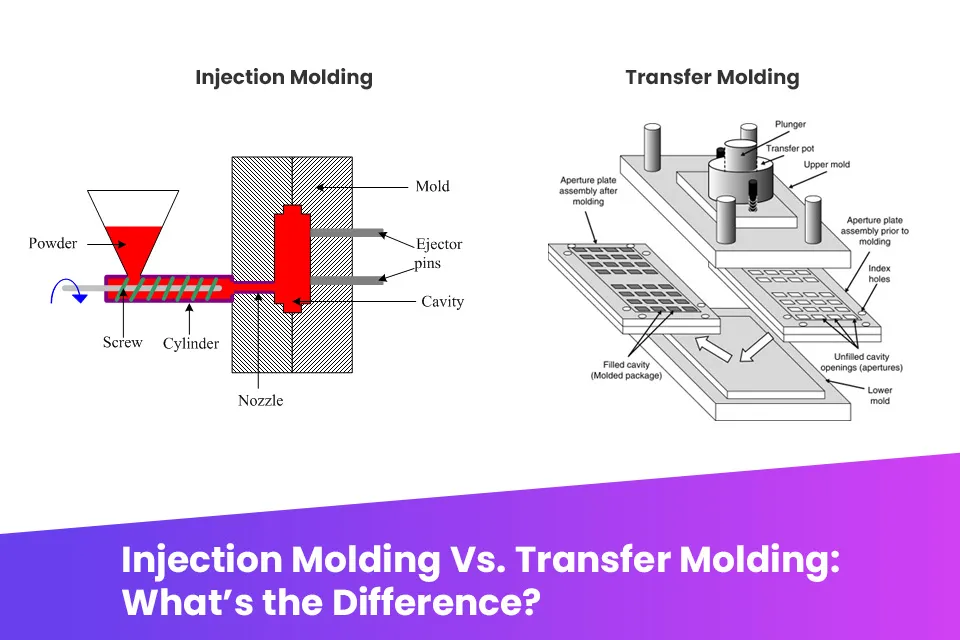
While compression molding places material directly into the mold cavity, transfer molding uses a separate chamber. Transfer molding generally provides better dimensional accuracy, reduced flash, and the ability to mold more complex parts with inserts.
Transfer Molding vs. Injection Molding
Injection molding is typically used for thermoplastics, while transfer molding is designed for thermosets. Transfer molding operates at lower pressures and temperatures, making it suitable for delicate inserts and electronic components.
Future Trends in Transfer Molding
Automation and Industry 4.0
The integration of smart sensors, IoT connectivity, and data analytics is transforming transfer molding operations. Real-time monitoring of process parameters enables predictive maintenance and quality control.
Advanced Materials
Development of new thermosetting compounds with enhanced properties, including higher temperature resistance, improved flow characteristics, and sustainable formulations, is expanding transfer molding applications.
Miniaturization
As electronic components continue to shrink, transfer molding technology is adapting to produce smaller, more precise parts with tighter tolerances and improved performance characteristics.
Conclusion
Transfer molding remains a vital manufacturing process for thermosetting materials, particularly in industries requiring precision, reliability, and the encapsulation of sensitive components. With ongoing technological advancements and material innovations, transfer molding continues to evolve, offering manufacturers versatile solutions for complex production challenges across multiple sectors.