
The Role of Extrusion Machines in Modern Manufacturing
Extrusion machines stand as one of the most versatile and fundamental pieces of equipment in contemporary industrial production. By forcing material through a shaped die to create long, continuous profiles with a fixed cross-section, extrusion technology enables the mass production of a vast array of products with high efficiency, consistency, and material economy. From the plastic components in everyday electronics to the aluminum frames of modern architecture, extrusion processes are integral to shaping the physical world around us. This article delves into the working principles, types, applications, and evolving trends of extrusion machinery, highlighting its indispensable role in modern manufacturing ecosystems.
Fundamental Principles of the Extrusion Process
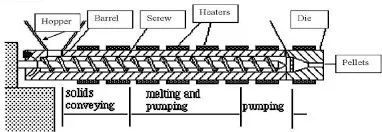
At its core, extrusion is a continuous forming process. The basic principle involves feeding a raw material—often in granular or pellet form—into a heated barrel. A rotating screw within the barrel conveys the material forward, simultaneously heating, mixing, and compressing it into a fully molten or plasticized state. This homogenized material is then forced through a precisely machined die, which imparts the desired two-dimensional shape to the product. Upon exiting the die, the extrudate is cooled, typically using water baths or air cooling, to solidify its form before being cut to length or coiled.
Primary Types of Extrusion Machines
Extrusion machines are categorized based on their mechanism and the materials they process. The two most common types are:
1. Single-Screw Extruders
The most widespread type, featuring a single rotating screw inside a barrel. It is renowned for its simplicity, reliability, and cost-effectiveness, making it ideal for processing a wide range of thermoplastics (e.g., PVC, LDPE, HDPE, PP) for products like pipes, sheets, and filaments.
2. Twin-Screw Extruders
These employ two intermeshing screws rotating inside the same barrel. They offer superior mixing, compounding, and devolatilization capabilities. Twin-screw extruders are essential for processing engineering plastics, food products, and for creating polymer blends or filled composites. They can be co-rotating or counter-rotating, each offering distinct shear and mixing characteristics.
Other specialized types include Ram Extruders (for materials that cannot be screw-driven, like PTFE) and Cold Extruders (used primarily in metal forming without significant heating).
Key Applications Across Major Industries
The adaptability of extrusion technology makes it a cornerstone in numerous sectors. The following table summarizes its pivotal applications:
| Industry | Typical Materials | Extruded Products |
|---|---|---|
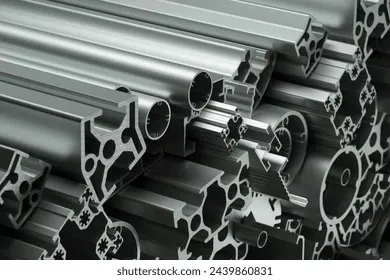
| Construction & Building | PVC, Aluminum, Composites | Window frames, pipes, conduits, decking, siding, insulation. |
| Packaging | LDPE, HDPE, PP, PET | Plastic films, bottles, containers, bags, blister packs. |
| Automotive | Engineering Plastics, Elastomers, Aluminum | Seals, hoses, trim, wire insulation, lightweight structural components. |
| Electrical & Electronics | PVC, Cross-linked Polyethylene (XLPE) | Wire and cable insulation, conduits, semiconductor components. |
| Consumer Goods | Various Thermoplastics | Toys, furniture components, household items, filaments for 3D printing. |
| Food Processing | Food Pastes, Doughs, Cereals | Pasta, breakfast cereals, snacks, pet food, confectionery. |
Advantages Driving Widespread Adoption
The dominance of extrusion in manufacturing is due to several compelling advantages:
- High Efficiency & Continuous Production: Extrusion operates as a continuous process, enabling non-stop, high-volume output which drastically reduces unit costs and increases productivity.
- Design Flexibility & Complexity: Intricate cross-sectional profiles that would be impossible or too costly to produce by other methods can be created consistently.
- Material Efficiency: The process generates minimal waste, as off-cuts and scrap can often be recycled directly back into the production stream.
- Consistent Product Quality: Modern computer-controlled extruders ensure remarkable dimensional accuracy and uniformity over long production runs.
- Versatility: A single extruder can often produce different products by simply changing the die and adjusting process parameters.
Future Trends and Technological Advancements
The evolution of extrusion machinery is closely tied to the demands of Industry 4.0 and sustainable manufacturing.
Integration of Industry 4.0
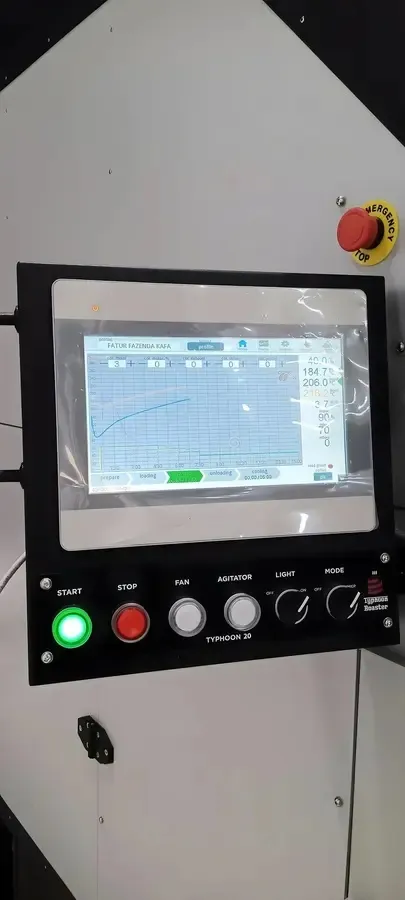
Smart extruders equipped with IoT sensors and AI-driven process control are becoming standard. These systems enable real-time monitoring of parameters like melt pressure, temperature, and viscosity, allowing for predictive maintenance, automatic adjustment to maintain quality, and seamless data integration with factory-wide MES (Manufacturing Execution Systems).
Sustainability and Circular Economy
There is a strong push towards extruders designed to handle high percentages of post-consumer recycled (PCR) materials. Advanced filtration and degassing systems are being integrated to purify recycled melt streams. Furthermore, machine designs are focusing on energy efficiency, reducing the carbon footprint of the extrusion process itself.
Micro-Extrusion and Additive Manufacturing
The precision of extrusion is being pushed to new limits with micro-extrusion for medical devices (e.g., catheters, micro-tubing) and electronics. Furthermore, extrusion is the foundational technology for Fused Deposition Modeling (FDM) 3D printers, blurring the lines between mass production and customized, additive manufacturing.
Conclusion
From humble beginnings in the production of lead pipes, extrusion technology has matured into a sophisticated, digitally-enabled manufacturing pillar. Its ability to efficiently and precisely shape a diverse range of materials into complex, continuous forms makes it irreplaceable. As manufacturing moves towards greater automation, customization, and environmental responsibility, the extrusion machine will continue to adapt, remaining at the heart of production lines that build our infrastructure, package our goods, and enable technological innovation. Its role is not merely functional but foundational to the scale and scope of modern industrial output.