
The Complete Guide to Hot Plate Welding Machine Manufacturers
The manufacturing landscape for plastic components heavily relies on robust and precise joining techniques. Among these, hot plate welding stands out as a premier method for creating strong, hermetic, and cosmetically superior bonds. At the heart of this process are the specialized hot plate welding machine manufacturers who design and build the equipment that makes it all possible. These manufacturers are pivotal in sectors ranging from automotive and appliance to medical and consumer goods, providing the technology that ensures product integrity and performance.
Understanding Hot Plate Welding Technology
Hot plate welding (also known as heated tool welding) is a thermal plastic assembly process. It involves heating two plastic parts at their joining surfaces using a precisely controlled heated platen. Once the material becomes molten, the platen is retracted, and the parts are pressed together under force, allowing the melts to mix and solidify into a single, strong piece.
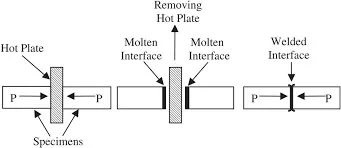
Figure 1: The fundamental three-stage process of hot plate welding.
The core advantages that drive demand for machines from specialized manufacturers include:
- Strength: Produces weld strength often exceeding 90% of the parent material.
- Hermeticity: Ideal for creating leak-proof seals for fluids and gases.
- Material Versatility: Excellent for welding large, complex parts from materials like PP, HDPE, ABS, and nylon.
- Repeatability: Highly automated process ensures consistent quality in high-volume production.
Key Considerations When Choosing a Manufacturer
Selecting the right hot plate welding machine manufacturer is a critical decision that impacts production efficiency, product quality, and total cost of ownership. Leading manufacturers differentiate themselves through several key areas.
1. Engineering Expertise and Customization
Top-tier manufacturers do not just sell standard machines; they provide engineered solutions. They work closely with clients to understand the specific part geometry, material, production rate, and quality requirements. This collaboration results in customized machines with tailored fixtures, heating profiles, and control systems.

Figure 2: Collaborative design phase between manufacturer and client engineers.
2. Machine Construction and Core Components
The durability and precision of a welder depend on its build. Reputable manufacturers use high-quality materials like hardened steel for platens and robust frames to withstand constant pressure and heat. The choice of heating elements (ceramic, aluminum), temperature controllers, and pneumatic or servo-driven actuation systems defines machine performance.
3. Control Systems and Data Integration
Modern hot plate welders are data hubs. Advanced manufacturers equip machines with sophisticated PLC or PC-based controls featuring touchscreen HMIs. These systems allow for precise recipe management, real-time monitoring of parameters (temperature, pressure, displacement), and data logging for full traceability and Industry 4.0 integration.
| Feature | Standard Offering | Advanced/High-End Offering | Impact on Production |
|---|---|---|---|
| Platen Heating | Standard Cartridge Heaters | Segmented, Zone-Controlled Heaters with IR Pyrometer Validation | Superior temperature uniformity for complex part geometries. |
| Actuation | Pneumatic Cylinders | Electric Servo Drives with Position Feedback | Ultra-precise speed and position control, repeatability, and energy efficiency. |
| Control System | Basic PLC with Simple HMI | Industrial PC with SPC Software, Ethernet/IP, and OPC UA | Enables predictive maintenance, full traceability, and seamless MES integration. |
| Frame Design | Standard Steel Frame | Stress-Relieved, Mechanite Cast or Welded Frame with Vibration Damping | Exceptional long-term stability and accuracy, minimizing deflection under load. |
The Manufacturing and Integration Process
Working with a professional manufacturer typically follows a structured project path:
- Application Review: Analysis of part design, material, and weld requirements.
- Feasibility & Prototyping: Often involves weld trials on a laboratory machine to define optimal parameters.
- Machine Design & Build: Custom design, fabrication, and assembly of the complete system.
- FAT (Factory Acceptance Test): The client witnesses and approves machine performance at the manufacturer's facility.
- Installation & SAT (Site Acceptance Test): Installation, commissioning, and training at the client's production plant.
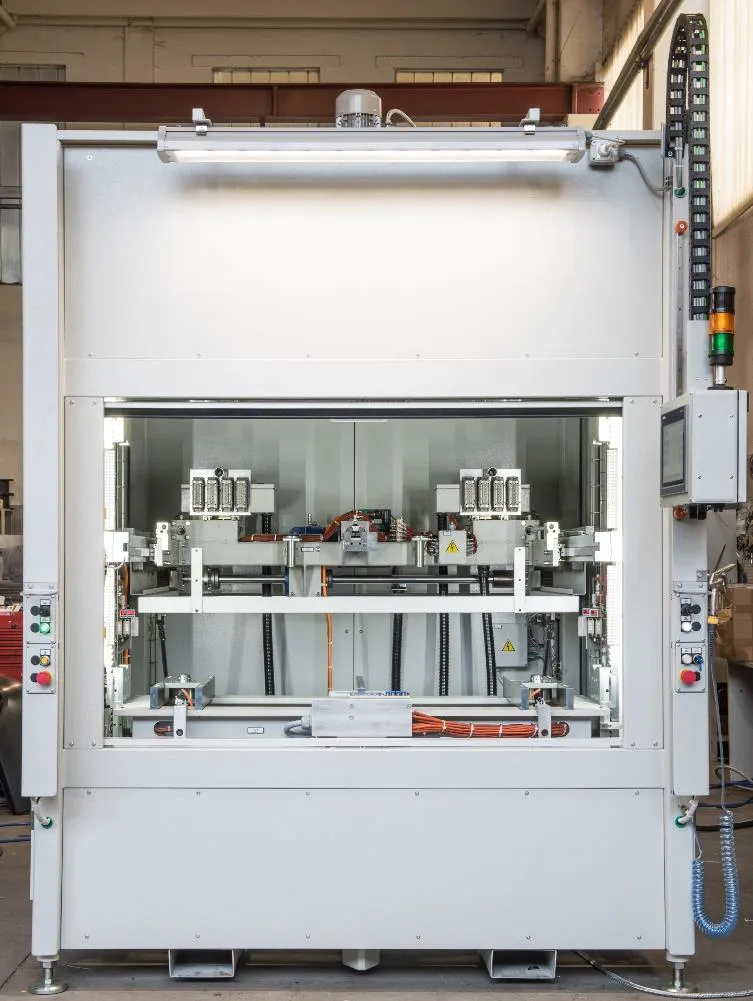
Figure 3: A custom-built hot plate welder during final quality assurance testing.
Leading Market Segments and Applications
Hot plate welding machine manufacturers serve a diverse array of industries. Their equipment is often the backbone of critical assembly lines.
Automotive
Manufacturers build machines for welding large components like battery housings for EVs, fluid reservoirs (coolant, washer), intake manifolds, and LED tail lights. The demand for high-strength, leak-proof joints is paramount.
Appliance and Industrial
This includes welding dishwasher sumps, pump housings, water filter housings, and large ductwork. Manufacturers focus on durability for high-cycle production.
Medical and Consumer
For products requiring integrity and cleanliness, such as diagnostic equipment housings, fluidic devices, and storage containers. Manufacturers here emphasize clean-room compatibility and validation support.
Summary: The Role of the Manufacturer
Hot plate welding machine manufacturers are more than equipment vendors; they are technology partners and process experts. Their value lies in translating a plastic joining challenge into a reliable, high-yield production solution. Success hinges on their engineering depth, commitment to quality construction, and ability to deliver not just a machine, but a fully integrated and supported production cell. Choosing the right manufacturer is the first and most crucial step in establishing a successful hot plate welding process.