
Optimizing Injection Molding Efficiency with Cold Runner Systems
Injection molding is a cornerstone of modern manufacturing, enabling the mass production of plastic parts with high precision and repeatability. Among the various technologies employed, the cold runner system stands out as a critical component for optimizing efficiency, reducing waste, and improving part quality. Unlike hot runner systems that maintain molten plastic in the runners, cold runner systems allow the material to solidify within the runner channels, which are then separated from the molded parts. This article explores how cold runner systems enhance injection molding efficiency, their key advantages, design considerations, and best practices for implementation.
Understanding Cold Runner Systems
A cold runner system is a network of channels that deliver molten plastic from the injection molding machine's nozzle to the cavities of the mold. As the name suggests, these runners are not actively heated, allowing the plastic to cool and solidify alongside the molded parts. The system typically consists of a sprue, primary runners, secondary runners, and gates. After ejection, the solidified runner system is separated from the parts, often reground and recycled as regrind material. This approach contrasts with hot runner systems, where the plastic remains molten in the runners, eliminating waste but requiring more complex and costly temperature control.
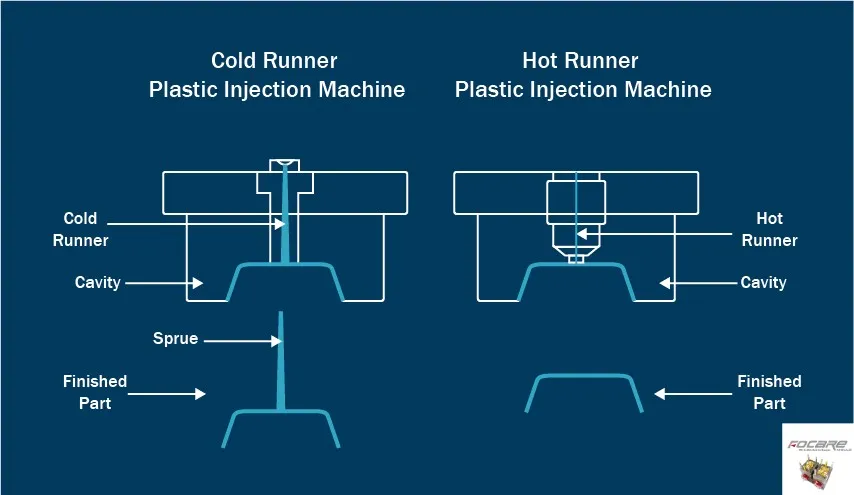
Figure 1: Schematic of a cold runner system in an injection mold, illustrating material flow from sprue to cavities.
Key Advantages for Efficiency Optimization
1. Material Savings and Recyclability
Cold runner systems generate runner scrap, but this material can often be reground and reused directly in the molding process (depending on material and quality requirements). This recyclability reduces raw material costs and minimizes environmental impact. For materials sensitive to thermal degradation, cold runners prevent prolonged heat exposure, maintaining material properties.
2. Lower Initial and Maintenance Costs
Cold runner molds are generally simpler in design and construction compared to hot runner molds. They do not require complex heating elements, temperature controllers, or thermal insulation. This results in lower upfront tooling costs and reduced maintenance expenses, as there are fewer components that can fail due to heating issues.
3. Flexibility and Color/Material Changeover
Changing colors or materials is typically faster and more straightforward with cold runner systems. Since the entire runner is purged with the new material, there is less risk of contamination from previous runs. This flexibility is crucial for manufacturers producing small batches or frequently switching between materials.
4. Suitability for a Wide Material Range
Cold runners are compatible with virtually all thermoplastics, including heat-sensitive materials (like PVC) or those with high melting temperatures (like PEEK). Hot runners can sometimes struggle with these materials due to thermal control challenges or degradation risks.
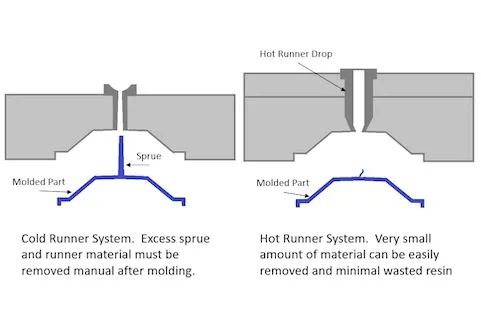
Figure 2: Cold runner scrap (left) separated from finished molded parts (right), ready for regrinding and recycling.
Design Considerations for Maximum Efficiency
To fully leverage the benefits of cold runner systems, careful design is essential. Key factors include runner balancing, gate design, and cooling optimization.
| Design Parameter | Optimization Goal | Impact on Efficiency |
|---|---|---|
| Runner Cross-Section | Minimize volume while ensuring adequate fill | Reduces material waste and cycle time (less material to cool) |
| Runner Balancing | Equalize flow length and pressure to all cavities | Improves part consistency, reduces rejects, and ensures uniform packing |
| Gate Design | Select appropriate type (e.g., edge, submarine, tab) and size | Controls filling behavior, minimizes vestige, and eases degating |
| Cooling Layout | Efficient cooling of both cavities and runner channels | Reduces overall cycle time by ensuring uniform and rapid cooling |
| Ejection Mechanism | Reliable separation of runners from parts and mold | Prevents mold damage, reduces downtime, and automates material handling |
Balancing Cycle Time and Waste
The primary trade-off with cold runner systems is between cycle time and material waste. Larger runners facilitate easier filling but increase cooling time and material volume. Advanced simulation software is now indispensable for optimizing this balance. Mold flow analysis can predict fill patterns, cooling times, and shrinkage, allowing designers to create runner systems that minimize both cycle time and scrap without costly trial-and-error.
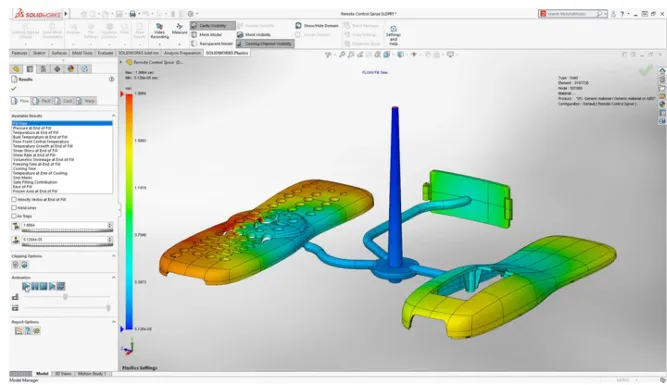
Figure 3: Mold flow analysis software visualizing pressure distribution and fill time in a balanced cold runner layout.
Implementing Best Practices
To maximize efficiency, manufacturers should adopt the following best practices:
- Regular Maintenance: Inspect and polish runner channels to prevent material hang-up and ensure consistent flow.
- Regrind Management: Establish strict protocols for regrind ratio and blending with virgin material to maintain part quality.
- Automated Degating: Use robotic systems or in-mold separation techniques to automatically remove runners, reducing labor and cycle time.
- Process Monitoring: Implement sensors to monitor injection pressure, temperature, and cycle consistency to quickly identify deviations.
Conclusion
Cold runner systems remain a highly efficient and cost-effective solution for a vast range of injection molding applications. By focusing on intelligent design, material management, and process control, manufacturers can significantly optimize production efficiency, reduce costs, and maintain high product quality. While hot runners offer advantages for specific high-volume applications, the simplicity, flexibility, and reliability of cold runner systems ensure their continued prominence in the plastic manufacturing industry. Embracing simulation tools and automation further enhances their potential, making cold runners a smart choice for sustainable and profitable molding operations.