
Laser Welding Machine for Aluminum: A Comprehensive Guide
Laser welding has revolutionized the fabrication and joining of aluminum alloys, offering a high-precision, efficient, and clean alternative to traditional welding methods. Aluminum, with its excellent strength-to-weight ratio, corrosion resistance, and thermal conductivity, is a cornerstone material in industries like aerospace, automotive, and electronics. However, welding aluminum presents unique challenges, including high reflectivity, thermal conductivity, and susceptibility to porosity and hot cracking. Modern laser welding machines for aluminum are specifically engineered to overcome these hurdles, delivering superior weld quality and productivity.
How Laser Welding Works for Aluminum
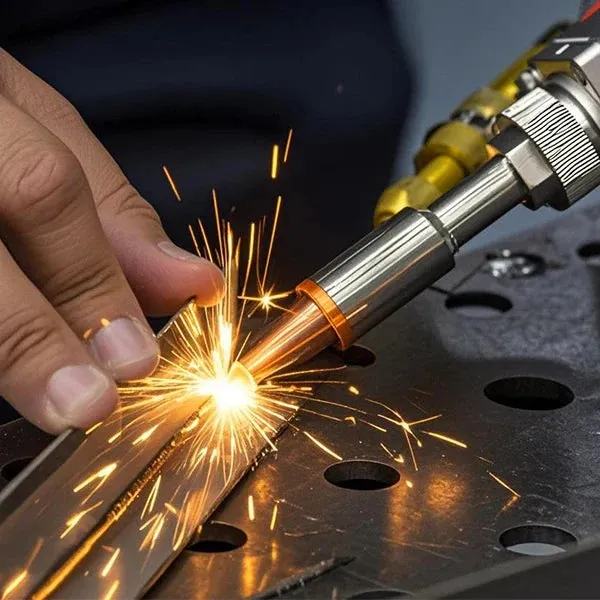
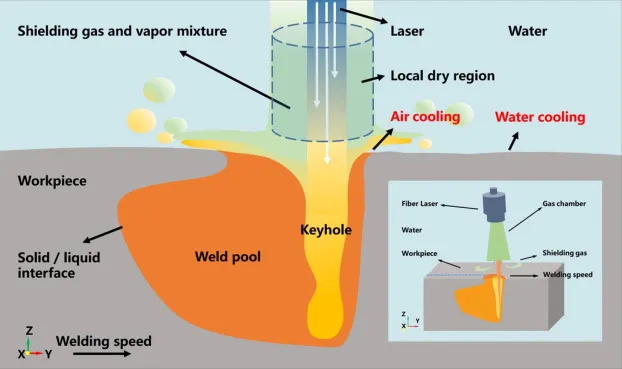
Laser welding utilizes a highly focused, high-energy density laser beam as a heat source to melt and fuse materials. For aluminum, the process typically involves keyhole welding, where the intense laser power vaporizes material, creating a deep, narrow vapor cavity (the keyhole) surrounded by molten metal. As the laser beam travels along the joint, the keyhole moves with it, and the molten metal flows around it to solidify and form a deep-penetration weld bead.
Overcoming Aluminum's Challenges
- High Reflectivity: Aluminum reflects a significant portion of incident laser light, especially at common wavelengths like 1µm (fiber lasers). Modern machines often use high-power densities to quickly overcome this initial reflectivity. Some systems employ pulsed lasers or lasers with specific wavelengths (e.g., blue or green lasers) that aluminum absorbs more efficiently.
- Thermal Conductivity: Aluminum's high thermal conductivity causes rapid heat dissipation. Laser welding counteracts this by delivering energy at an extremely high rate, creating a localized heat-affected zone (HAZ) before the heat spreads.
- Porosity & Cracking: Laser welding's rapid cooling and solidification can minimize time for gas entrapment and crack formation. Proper shielding gas (often Helium or Argon-Helium mixes) and meticulous surface cleaning are critical to prevent porosity from oxides or contaminants.
Key Advantages of Laser Welding Aluminum
The benefits of using a dedicated laser welding machine for aluminum are substantial:
| Advantage | Description | Impact |
|---|---|---|
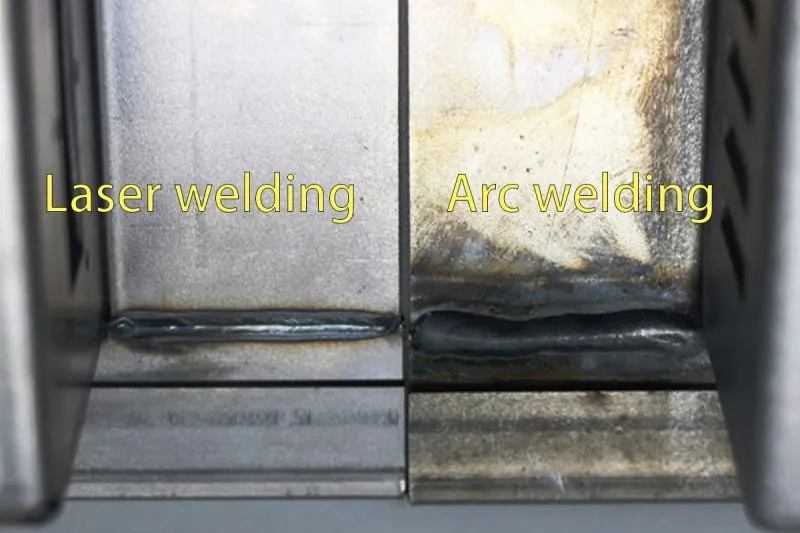
| Minimal Distortion | Highly concentrated heat input results in a small HAZ. | Preserves material integrity, reduces post-weld rework. |
| High Speed & Automation | Welding speeds can be several meters per minute. | Significantly increases production throughput. |
| Deep Penetration & Narrow Seams | Enables deep welds with a high aspect ratio. | Allows for lightweight design with strong joints. |
| Non-Contact Process | No tool wear or mechanical force on the workpiece. | Reduces contamination and allows welding in complex geometries. |
| Excellent Weld Quality | Produces clean, precise, and repeatable welds. | Ideal for high-strength, aesthetic, or hermetic seals. |
Critical Parameters in Aluminum Laser Welding
Successful welding depends on optimizing several interdependent parameters:
- Laser Power & Mode: Continuous wave (CW) for deep welds; pulsed for thin materials or to control heat input.
- Welding Speed: Must be balanced with power to achieve proper penetration without defects.
- Beam Focus & Spot Size: Determines power density. A smaller spot increases penetration depth.
- Shielding Gas: Type, flow rate, and delivery angle are crucial to protect the molten pool from oxidation.
- Filler Material (if used): Wire feeding can help bridge gaps and adjust alloy composition to prevent cracking.
Applications Across Industries
Aerospace
Used for welding thin-walled structures, fuel tanks, and engine components where weight savings and joint reliability are paramount.
Automotive
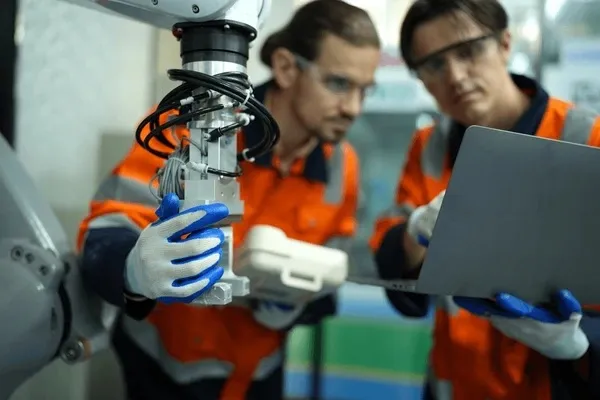
Critical for manufacturing battery enclosures for electric vehicles (EVs), body-in-white components, air conditioning systems, and powertrain parts.
Electronics & Consumer Goods
Enables hermetic sealing of sensors and electronic housings, and precise welding of delicate components in smartphones and laptops.
Shipbuilding & Rail
Employed for creating large, distortion-free panels and structures from aluminum alloys.
Choosing the Right Laser Welding Machine
Selecting a machine requires careful consideration of your specific needs:
| Factor | Considerations |
|---|---|
| Laser Source Type | Fiber Lasers: Most common, efficient, robust. Disk Lasers: Excellent beam quality. Pulsed Nd:YAG: For precision work. Blue/Green Lasers: Emerging tech for highly reflective materials. |
| Power Rating | Ranges from ~1 kW for thin sheets to 6 kW+ for deep penetration in thick plates. Match power to material thickness and desired speed. |
| Integration & Automation | Benchtop for manual work, CNC gantry systems for 2D/3D parts, or robotic integration for complex, high-volume production. |
| Ancillary Systems | Quality of wire feeder, shielding gas delivery, seam tracking, and process monitoring systems. |
Conclusion
The laser welding machine for aluminum represents a pinnacle of modern manufacturing technology. By providing a solution tailored to the material's specific properties, it enables the creation of stronger, lighter, and more reliable products. As laser technology continues to advance—with improvements in beam quality, power, and the advent of new wavelengths—its dominance in aluminum joining will only grow. For any industry working with aluminum, investing in the right laser welding technology is a strategic move towards greater efficiency, quality, and innovation.