
Future Trends in Hot Plate Welding Machine Technology and Automation
Hot plate welding, a staple in thermoplastic assembly for industries like automotive, medical, and consumer goods, is undergoing a profound transformation. Driven by the demands for higher precision, efficiency, and flexibility, the next generation of hot plate welding machines is set to be smarter, more connected, and more sustainable. This article explores the key technological and automation trends shaping the future of this critical joining process.
1. Intelligent Process Control and Artificial Intelligence
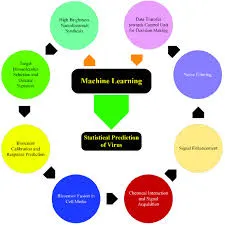
The integration of Artificial Intelligence (AI) and Machine Learning (ML) is perhaps the most significant leap forward. Future hot plate welding machines will move beyond simple programmable logic controller (PLC) setups to systems capable of self-optimization.
- Adaptive Welding Parameters: AI algorithms will analyze real-time data from sensors (temperature, pressure, displacement) to dynamically adjust heating time, temperature, and welding pressure for each cycle, compensating for material batch variations or environmental conditions.
- Predictive Quality Assurance: By learning from historical data, AI can predict weld quality and detect potential defects (like insufficient penetration or flash formation) before they occur, moving quality control from a post-process inspection to an in-process guarantee.
- Predictive Maintenance: ML models will monitor component wear, heater performance, and mechanical alignment, scheduling maintenance only when needed, thus minimizing unplanned downtime.
2. Advanced Robotics and Flexible Automation
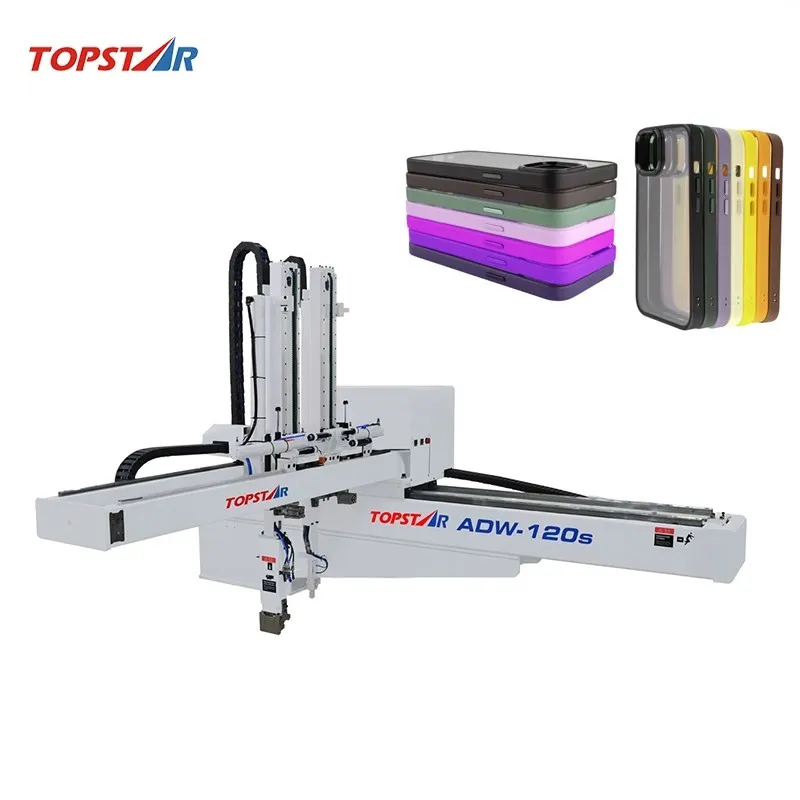
Automation in hot plate welding is evolving from rigid, dedicated systems to highly flexible robotic cells.
- Collaborative Robots (Cobots): Lightweight, safe-to-operate cobots will be increasingly used for part handling, loading, and unloading. They can work alongside human operators for small batch production or complex assemblies, offering easy reprogramming for new part geometries.
- Integrated Vision Systems: 2D and 3D vision guidance will allow robots to precisely locate and orient parts on the welding platens, accommodating part tolerances and reducing the need for expensive, custom fixtures.
- Multi-Station and Hybrid Cells: Future systems will integrate hot plate welding with secondary operations (e.g., leak testing, trimming, labeling) in a single automated cell, streamlining production flow.
3. IoT Connectivity and Industry 4.0 Integration
The Industrial Internet of Things (IIoT) will make hot plate welders integral nodes in the smart factory ecosystem.
| Capability | Description | Benefit |
|---|---|---|
| Real-Time Monitoring & OEE | Continuous data streaming on machine status, cycle times, and energy consumption. | Live Overall Equipment Effectiveness (OEE) dashboards for plant managers. |
| Digital Twin | A virtual replica of the welding process for simulation and optimization. | Test new parameters virtually, reduce physical setup time, and train operators. |
| Cloud-Based Analytics & Management | Centralized storage and analysis of welding data from multiple machines globally. | Benchmark performance, standardize best practices, and enable remote expert support. |
| Seamless MES/ERP Integration | Direct communication with Manufacturing Execution and Enterprise Resource Planning systems. | Automatic job order downloads, production reporting, and traceability (part ID, weld parameters, operator). |
3.1 Enhanced Traceability and Digital Threads
Every welded part will have a complete digital record—a "digital thread"—linking it to the specific weld parameters, machine conditions, and quality data from its production cycle. This is crucial for regulated industries like medical devices and aerospace.
4. Sustainable and Energy-Efficient Solutions
Environmental concerns are driving innovation in machine design.
- High-Efficiency Heating Systems: Development of advanced ceramic heaters, induction heating, or hybrid systems that reduce heat-up times and energy consumption.
- Eco-Mode Operations: Smart energy management systems that put heaters in standby or reduced-power mode during idle periods without compromising readiness.
- Compatibility with Bio-Based & Recycled Plastics: Machines will feature more precise temperature control and process windows to handle the often more challenging weld characteristics of sustainable materials.
5. Enhanced User Experience (UX) and Simplified Programming
Future machines will prioritize human-machine interaction (HMI).
- Intuitive Touchscreen HMIs: Graphical interfaces with step-by-step wizards for job setup, resembling modern consumer electronics.
- Augmented Reality (AR) Assistance: AR glasses or tablets could overlay setup instructions, maintenance steps, or weld quality data directly onto the operator's field of view.
- Standardized Communication Protocols: Widespread adoption of OPC UA and MTConnect for plug-and-play connectivity with other factory equipment.
Conclusion
The future of hot plate welding is one of convergence—where precision mechanical engineering meets cutting-edge digital technology. The trends of AI-driven intelligence, robotic flexibility, IIoT connectivity, sustainability, and superior UX are not isolated; they will combine to create welding systems that are more productive, reliable, and adaptable than ever before. These advancements will enable manufacturers to meet the growing demands for complex, high-quality plastic assemblies while achieving new levels of operational efficiency and traceability. The hot plate welder is evolving from a standalone tool into a central, intelligent component of the fully digitalized manufacturing floor.